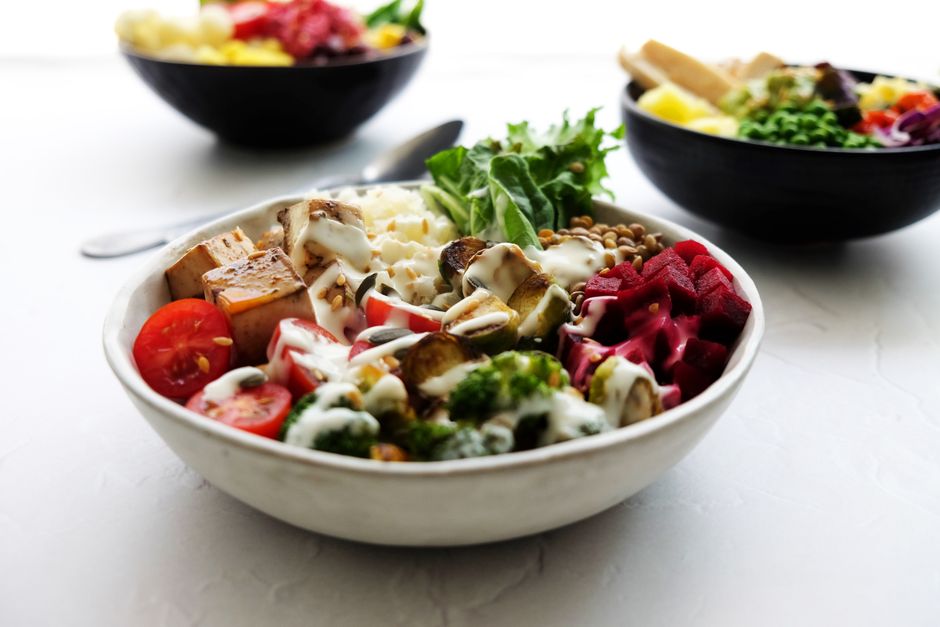
Improving gut health is largely a calculation of fibre, water, and repetition. No cure, no kit, no ten-step plan you finish in a weekend. Voedingscentrum sets 30 to 40 grams of fibre per day for adults — the average Dutch intake is 21 grams. Bridging that gap is what produces a noticeable difference.
Below are eight steps, ranked by effect-per-effort. The first four are practically achievable daily for almost anyone. The last three demand more attention or a habit change. And at the end: what does NOT work, and when to call your GP.
1. Eat 30 grams of fibre per day
Fibre is the direct fuel of the bacteria in your colon. No fibre, no food for your microbiome — that simple. Voedingscentrum names 30 to 40 grams per day as the guideline, with a lower bound of 25 grams where many Dutch people fall short.
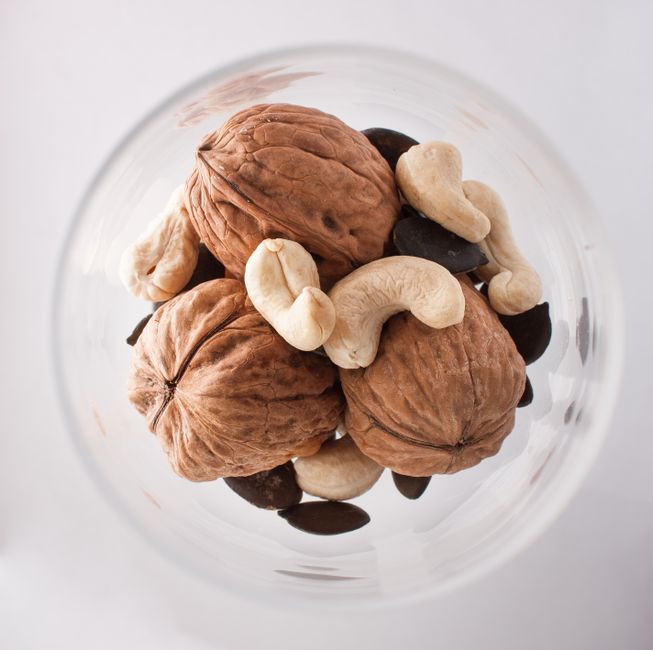
Practical: a bowl of whole-grain oats (4 g fibre), an apple with skin (4 g), a handful of nuts (3 g), 200 g of vegetables at dinner (8 g), and two slices of whole-grain bread (5 g) brings you to around 24 grams. To reach 30 g, add one portion of pulses (lentil soup, chickpeas in salad — 6 g per portion) or a second piece of fruit.
Build up gradually. Anyone now at 15 g who jumps to 35 g tomorrow will almost certainly experience bloating and gas. Two weeks to grow into 30 g, with enough water alongside, gives your microbiome time to adapt.

2. Add fermented food daily
Fermented food contains living bacteria that supplement your own microbiome. Not the wonder marketing makes of it — but a useful, cheap addition supported by observational studies and a 2021 randomised Stanford trial.
One tablespoon of sauerkraut, a glass of kefir, a cup of yoghurt with live cultures, a portion of kimchi — rotate through the week. Pasteurisation kills the bacteria, so check the label for 'live cultures' or 'unpasteurised'. Supermarket sauerkraut from a tin does not count; the refrigerated version does.
For anyone starting out: one tablespoon a day is enough to see an effect within three weeks. More is not better; your gut needs to acclimatise.

3. Drink one and a half to two litres of water per day
Fibre that stays dry does not help you. It needs water to bulk up and keep your bowel moving. Voedingscentrum names one and a half to two litres of fluid per day, including coffee, tea, and water from food. More in hot weather or with intensive exercise.
Practical: one glass with each meal, one with each break, one before bedtime. That brings you to six glasses — roughly one and a half litres. Anyone eating a lot of salt or sugar needs more water to keep the gut functioning normally.

4. Move every day, even briefly
Movement stimulates intestinal peristalsis — the muscle motions that push food through your gut. Anyone who sits a lot has measurably slower transit. A daily twenty-minute walk is enough to reverse that effect.
For those who want more: moderate-intensity exercise (running, cycling, swimming) three times a week also shifts the composition of your microbiome favourably. Not because of weight loss, but through the effect on stress hormones and the immune system. That said, it is for those already moving regularly — beginners are better off keeping that walk consistent first.
5. Limit alcohol, ultra-processed food, and added sugars
Three categories that actively work against your gut. Alcohol disturbs the gut wall and bacterial composition — the more and the more often, the larger the effect. Voedingscentrum's guideline of zero standard drinks per day is, for the gut, no exaggeration.
Ultra-processed food (ready meals, brightly coloured snacks, soft drinks, packets and bags) contains additives and emulsifiers that have been linked in studies to a less favourable gut flora. You do not have to eliminate it entirely — but bring it back to less than a third of what you eat, and replace the rest with unprocessed ingredients.
Added sugars — no problem in an apple, a problem in two biscuits and a soft drink at the office. The World Health Organization advises less than 10% of your daily calories from added sugar; ideal is below 5%. For an adult on 2000 kcal, that comes to about 25 grams per day — less than a can of cola.
6. Sleep seven to eight hours and manage chronic stress
The connection between gut and brain — the 'gut-brain axis' — is scientifically established. Chronic stress raises cortisol, which in turn makes the gut wall more permeable and disturbs microbiome balance. Anyone sleeping poorly for months sees digestive complaints follow.
Sleep seven to eight hours per night at roughly the same time. Managing stress demands attention to what you can change (workload, boundaries, worry slot), not only to what you can relax (yoga, meditation). We have written a separate post with eight concrete tips on this — the overlap with this post is no accident.
7. What does NOT help: 'gut reset' cures and most probiotic pills
Time for the honest aside you rarely encounter in a sales pitch: gut-reset cures give you nothing that a week of fibre-rich eating does not also give. The marketing around 'detox' and 'gut reset' is strong; the science behind it is practically absent. Resetting your gut is something it does every three days — through food, water, and movement, not through a € 89 kit.
The same goes for most probiotic pills. EFSA has so far approved no probiotic claim for specific health effects. What does have a claim: live yoghurt cultures for lactose intolerance (improves lactose digestion). For other probiotic pills the claim 'for your gut flora' is marketing language, not a scientific statement.
What does work: fermented foods (see tip 2) and fibre (tip 1). Both cheaper than supplements, better evidenced, and without four colourful packagings.
8. When to call your GP directly
Self-help works for people with general complaints and ordinary gut function. It does not work for every case. Call your GP or the Dutch MLDS (gut foundation) helpline in these situations.
Blood in the stool or black-coloured stool. Not a 'wait and see' symptom — contact directly.
Unexplained weight loss of more than five kilos without any change in your eating pattern.
Complaints lasting longer than four weeks: chronic diarrhoea, persistent constipation, recurrent abdominal pain, bloating that does not resolve with dietary adjustment.
Family members with bowel cancer, coeliac disease, or Crohn's disease. With hereditary predisposition, screening is wiser earlier than self-help.
A conversation with your GP takes fifteen minutes. Avoiding it offers no advantage — early diagnosis of bowel conditions gives the best prognosis.
Frequently asked questions
How much fibre per day does an adult need?
Voedingscentrum recommends 30 to 40 grams of fibre per day for adults. The average Dutch intake is around 21 grams. Bridging that gap can be done with an apple, a handful of nuts, a portion of pulses, and replacing white bread with whole grain.
Which food is best for the gut?
Fibre-rich food (whole grains, pulses, vegetables, fruit, nuts, and seeds) plus a small daily portion of fermented food (sauerkraut, kefir, yoghurt with live cultures, kimchi). Enough water alongside. There is no single wonder food; it is the combination and the regularity.
Do probiotic supplements work?
EFSA has so far approved no probiotic claim for specific health effects, except for live yoghurt cultures for lactose digestion. For most people, fermented foods deliver more than a pill bottle.
How long until gut improvement is noticeable?
A measurable shift in the microbiome takes around two to three weeks of consistent change. Symptoms such as bloating or irregular bowel motions often ease within one to two weeks, provided you keep up the adjustments.
What signals mean I should see a GP?
Blood in the stool, black-coloured stool, unexplained weight loss of more than five kilos, complaints lasting longer than four weeks, or hereditary predisposition for bowel cancer/coeliac/Crohn's. Call directly, do not wait.
Do 'gut reset' cures help against gut complaints?
The scientific basis is thin. What is in these cures (extra fibre, water, sometimes fermented food) works because it is basic lifestyle advice — not because of the 'reset' concept. A week of fibre-rich eating gives the same effect at no cost.