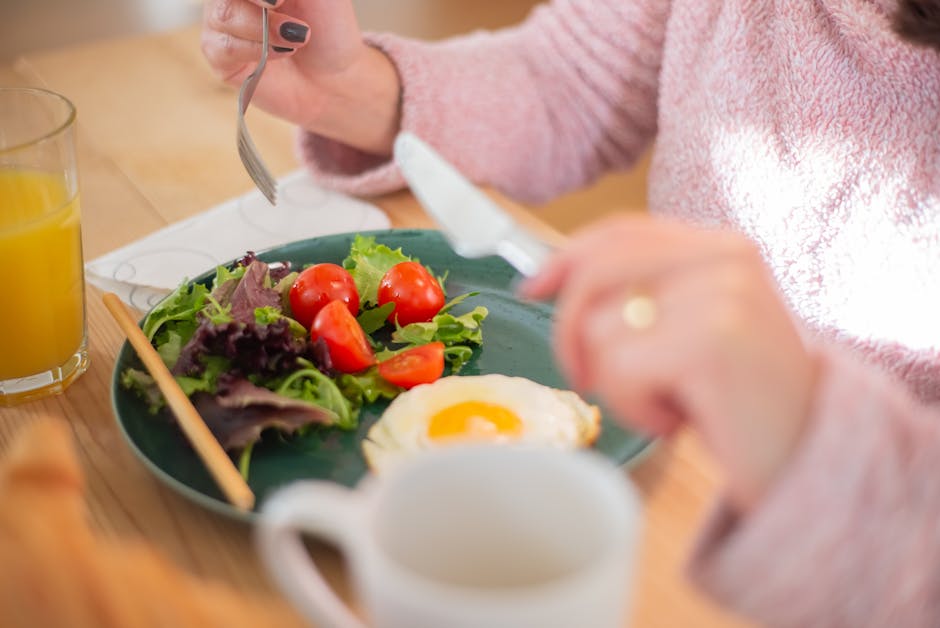
How much protein do you need as a woman per day to lose weight? Between 1.2 and 1.6 grams per kilogram of body weight. For a woman of 70 kilos that means 84 to 112 grams of protein per day, spread across three meals and one or two snacks. That is two to three times what the average Dutch woman currently consumes.
Why so much? Because losing weight without enough protein costs not only fat but also muscle. And muscle loss makes the yo-yo effect more likely, not less. Below we calculate this concretely: per body weight, per meal, with examples from ordinary Dutch products — no complicated maths and no shakes required. Plus: when these numbers do not apply to you and you should consult your doctor instead.
The baseline: what the Dutch Health Council recommends as a minimum
The Dutch Health Council (Gezondheidsraad) recommends 0.83 grams of protein per kilogram of body weight per day as the minimum for adult women. For a 70-kilo woman that comes down to 58 grams per day. Most Dutch women reach this through a normal Dutch diet.
This figure is the minimum to prevent deficiencies, not the optimum for those who want to lose weight or build muscle. It applies to a healthy adult woman maintaining her weight, without elevated needs. Once your goal changes — fewer kilos, more muscle, or muscle preservation while ageing — the number rises.
What the average Dutch woman currently consumes is around 70 grams per day according to the Dutch food consumption survey. That is enough to prevent deficiencies. It is not enough to lose weight without losing muscle, especially not for women over 45.
When losing weight: 1.2 to 1.6 grams per kilogram of body weight
As soon as you are in a caloric deficit — meaning you are losing weight — your protein needs increase. Sports nutrition and geriatric sources recommend between 1.2 and 1.6 grams of protein per kilogram of body weight per day during weight loss. For some situations (intensive strength training, women around menopause) the advice rises to 1.8 or 2.0 grams per kilogram.
Concretely for different body weights. A woman of 60 kilos: 72 to 96 grams of protein per day. For 70 kilos: 84 to 112 grams. For 80 kilos: 96 to 128 grams. Choose the lower number when starting out and build up gradually — most women we coach are 30 to 50 grams below their target in the first weeks.
The biological reason for the higher need: in a caloric deficit your body switches to a faster protein-breakdown cycle. For every gram of protein you do not consume, your body may break down a gram of muscle to supply those amino acids. Adequate protein keeps muscle intact. Inadequate intake makes you lose weight at the cost of your metabolism — and a lower resting metabolism makes it harder to maintain weight afterwards.
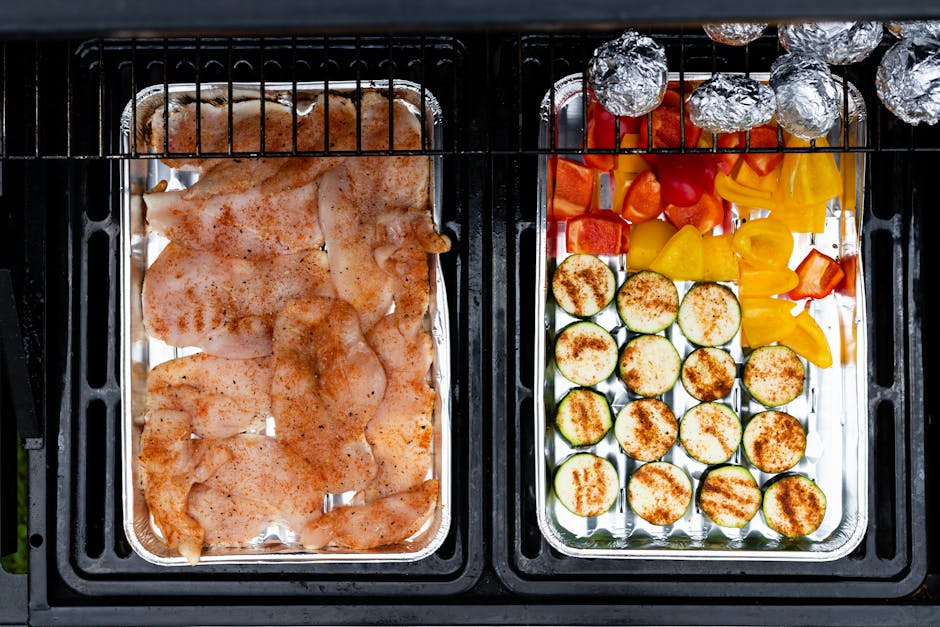
What does 100 grams of protein per day look like in real food?
One hundred grams of protein sounds like a lot. In practice it is achievable without shakes if you plan 20 to 30 grams per meal. A typical day for a 70-kilo woman could look like this.
Breakfast — 200 grams of skyr with oats and walnuts: roughly 24 grams of protein. Or two eggs with wholegrain bread and a slice of cheese: 22 grams. Or cottage cheese with fruit and pumpkin seeds: 28 grams.
Lunch — two slices of wholegrain bread with hummus and tuna: 26 grams of protein. Or a salad with 150 grams of chicken and lentils: 38 grams. Or a three-egg omelette with feta and spinach: 28 grams.
Snack — quark with blueberries: 18 grams of protein. Or a handful of mixed nuts with a block of cottage cheese: 14 grams. Or a hard-boiled egg with cucumber: 8 grams.
Dinner — 150 grams of salmon or chicken with vegetables and brown rice: 35 grams of protein. Or plant-based: 200 grams of tofu with broccoli and quinoa: 32 grams.
Total: between 95 and 130 grams of protein per day, depending on your choices. No shake, no powder. Just a pattern most Dutch women do not arrive at by themselves — it often starts with too little protein at breakfast and lunch, and is then caught up too late in the evening.
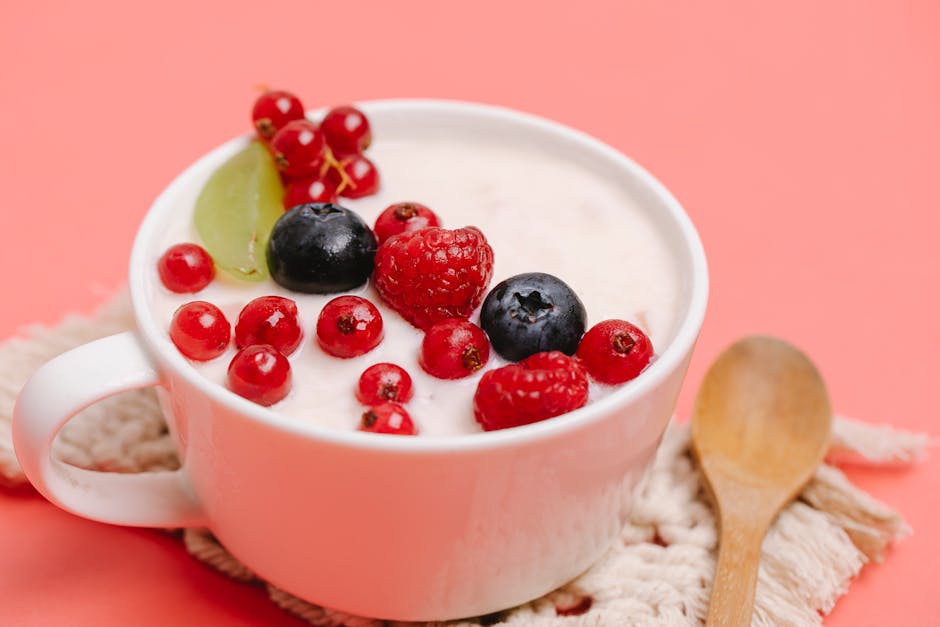
Spreading protein across the day: four times 20 to 30 grams beats two times 50
How you distribute protein matters almost as much as how much you consume. Research indicates that your body uses at most 25 to 30 grams of protein per meal effectively for muscle preservation or growth. Anything beyond that is digested but not used for muscle — it is burned for energy or stored.
In practice: four moments of 20 to 30 grams beats the typical Dutch pattern of light breakfast, light lunch, meat-heavy dinner. Shift your first protein moment earlier in the day — not to adjust calories, but to improve satiety and preserve muscle between meals.
A small rule of thumb that works: every meal contains a palm-sized protein source. An egg is half a palm. Two eggs or a block of cheese plus yogurt approximates one palm. A whole chicken breast is about one palm. It is not science, but it works — especially on days when you have no time to weigh everything.
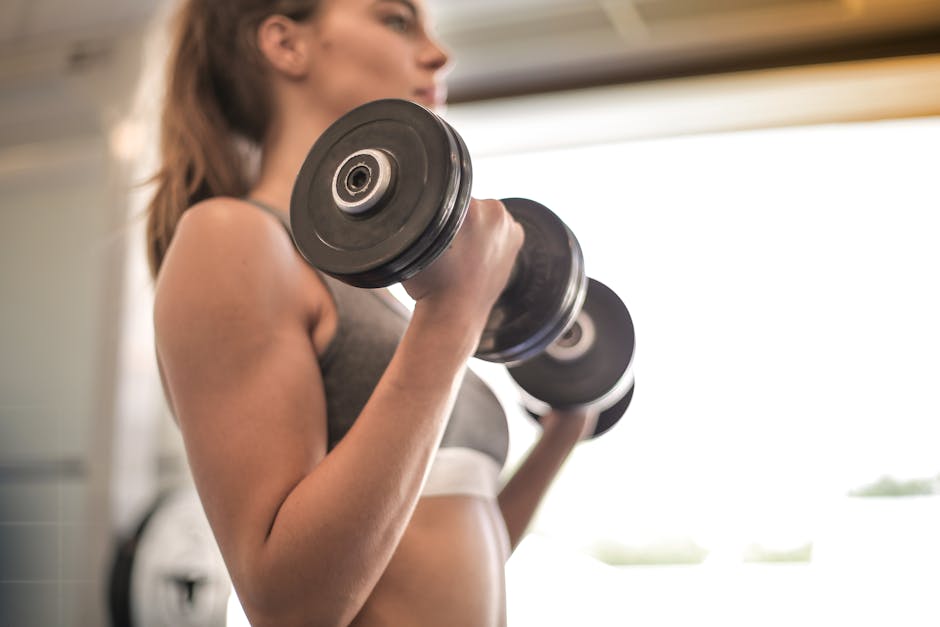
Strength training is the other half of the story
Protein without strength training is half the work. Your body needs a stimulus to lay down or preserve muscle from the extra amino acids. Eating more protein without that stimulus produces no new muscle — the surplus is burned for energy and the difference goes unnoticed.
The Dutch Standard for Healthy Movement recommends strength training twice a week as a separate pillar alongside 150 minutes of cardio per week. For the goal of losing weight while preserving muscle, this minimum matters. For women over 45 — when natural muscle loss accelerates due to declining oestrogen — two to three times a week is not a lot; it is what is needed.
Do not start big. Thirty minutes, two days a week, with progressive overload. Squats, Romanian deadlifts, push-ups (or a modified version), rows. Six exercises, three sets each, with a weight that allows no more than eight to twelve repetitions. If that gets easy: increase the weight next week.
The combination of about 1.4 grams of protein per kilo per day plus strength training twice a week is what makes a fitter version of your body possible — not just lighter, but also stronger. It is exactly why our entire food-first approach rests on these two pillars.
During menopause and with reduced appetite, different numbers apply
Two groups need extra attention and we see them often in practice.
Women in menopause. Declining oestrogen causes accelerated muscle loss and a shift in fat distribution toward the abdomen and hips. The Health Council minimum is then far too low. Research groups on menopause recommend 1.2 to 1.5 grams of protein per kilo, rounded up around and after menopause. In practice that means: more protein at breakfast and lunch, and seriously committing to or continuing strength training.
Women on a weight-loss injection (Ozempic, Wegovy, Mounjaro, Saxenda). GLP-1 medication strongly reduces appetite. Many women we coach eat under 1000 kcal per day on the injection and no longer meet their protein target. Short term not a problem, long term it becomes one — you lose weight, but you lose proportionally more muscle. For that specific path we have separate coaching after the injection. Same numbers, different execution.
In both situations, shakes or powders are not immediately needed. A different rhythm is. Protein earlier in the day, strength training taken seriously, and goals that move with your situation — not the same plan that a thirty-year-old without medication would follow.
When this is not for you
Not everyone benefits from more protein. Three situations in which you should consult your doctor or dietician rather than follow these numbers.
With kidney disease. With reduced kidney function, higher protein intake may be harmful. Always consult your GP or internist before structurally increasing your protein intake.
With an eating disorder or a history of one. Counting calories, weighing food, hitting targets — for those vulnerable to eating disorders this may be exactly the wrong focus. Then no plan is better than this plan, and a mental health professional or specialised dietician is the right contact.
With chronic nutrition-related conditions — type 1 diabetes, Crohn's disease, severe kidney problems, liver failure. Your dietician via your GP outranks generic advice and has access to your lab values. Our approach does not replace that path.
For everyone else: for most women who want to structurally eat better and preserve their body, more protein is likely what you currently miss the most. Calculate it, spread it across the day, train strength twice a week — and see where you stand three months from now.
Frequently asked questions
How much protein per day for a 70-kilo woman who wants to lose weight?
Between 84 and 112 grams of protein per day (1.2 to 1.6 grams per kilo). Spread that across four moments of 20 to 30 grams. With intensive strength training or around menopause, increase toward 125 grams.
Which protein sources suit a woman wanting to lose weight best?
Eggs, low-fat dairy (skyr, quark, cottage cheese), chicken, fish, legumes (lentils, chickpeas, beans), tofu, tempeh, nuts and seeds. A mixed pattern works best — different sources together provide all essential amino acids.
Do I need to take a protein shake to reach my protein target?
Usually not. With attention to breakfast and lunch you can reach 100 to 120 grams per day from regular food. A shake can help on busy days or with low appetite, but is not a replacement — it is a tool when it cannot be done otherwise.
Can I consume too much protein?
With healthy kidney function, intake up to 2 grams per kilo body weight is safe according to large reviews. Above that level there is little additional effect and the surplus is used for energy or excreted. With kidney disease, different rules apply — consult your doctor.
Does this approach work during menopause?
Yes, especially then. Declining oestrogen accelerates muscle loss around menopause. A protein intake toward 1.5 grams per kilo plus strength training two to three times a week makes the difference between losing weight and losing muscle.
How much protein per meal is enough?
Twenty to thirty grams per moment. Beyond that, your body utilises little extra per meal for muscle preservation. Four times 25 grams therefore works better than two times 50 grams — especially because you then better distribute protein across the day.