
Reducing stress works best when you keep one tip up for three weeks, not when you try 25 at once. Thuisarts notes that self-help typically shows a measurable effect after four weeks. That is the time horizon to plan for — not one good day, not a weekend offline.
Below are eight practical tips, ranked by effect-per-effort. The first five are doable daily for almost anyone. The last three demand more attention. And at the bottom: when this self-help track no longer fits and you should call a GP instead.
1. Move every day, even if briefly
Movement is the most studied method for clearing acute stress. The body metabolises adrenaline and cortisol faster during moderate exertion. A twenty-minute walk outside does more than an hour on the couch with a mindfulness app.
Practical: choose a form of movement you can keep up without thinking. Not the form you dream about, the form you actually do tomorrow morning. Outside beats inside — daylight regulates your cortisol rhythm; artificial light does so much less effectively.

2. Keep regular times for sleep, meals, and work
The body likes predictability. Seven to eight hours of sleep per night at roughly the same time gives your stress system the pause it needs to handle the next day. Eat at fixed times too — irregular eating gives sugar and cortisol swings that feel like tension.
Anyone sleeping badly because of stress is in a loop: stress keeps you awake, sleep loss amplifies the stress. Break the loop with the time rule, not the sleep rule. Going to bed early and getting in later works better than suddenly trying to fall asleep at eleven because you happen to be exhausted today.

3. Do one breathing exercise per day
Five minutes of conscious breathing has a measurable effect on your heart rate and blood pressure. The 4-7-8 technique is the simplest: four seconds in through your nose, seven seconds hold, eight seconds out through your mouth. Three or four rounds is enough.
More important than which technique: the same time, every day. Right after waking up, or as a signal between work and home life. Not at the moment you are already stressed — that works less well. A daily moment in a calm state trains your nervous system to relax faster when it actually matters.
4. Set boundaries at work and practice saying 'no'
Work stress rarely arises from the work itself — more often from the volume of saying yes. Anyone who takes everything on, finishes everything, and attends every meeting ends each evening with leftover work and the sense of falling behind. That is not a workload problem; it is a boundary problem.
Concretely: learn to recognise at least three types of requests where 'no' is the right answer. An ad-hoc task that does not fit your plan. A meeting where you add no value. A colleague who interrupts you while you are in flow. For each: a pre-prepared sentence. 'I cannot fit this in this week, would next week work?' beats improvising a fresh response every time.
Anyone struggling with this is well served practising it with a coach or therapist. It is a skill, not a personality trait.
5. Limit worrying to one fixed slot per day
Worrying is thinking without an end-result. You repeat the same concerns without translating them into action. That eats your mental energy without resolving anything. Thuisarts advises: agree with yourself that you are allowed to worry for a maximum of thirty minutes to an hour per day, at a fixed time — for example six to half past six in the evening.
Does a worrying thought come up at another moment? Write it on a note, set it aside, pick it up during your worry slot. Nine out of ten thoughts are less urgent by then than they seemed in the moment. For the tenth: turn it into one concrete action. 'I will call my employer tomorrow' is usable. 'What if…' is not.

6. Adjust your food: less sugar, less caffeine
Food does not solve stress, but the wrong food makes it measurably worse. Three adjustments that recur in almost every nutrition advice around stress:
Avoid sugar swings. Sugar gives short energy and afterwards a dip that your nervous system reads as stress. Replace sugary snacks with protein- or fat-rich alternatives (a handful of nuts, cheese, quark) and you will notice a difference within a week.
Less caffeine after lunch. A cup of coffee raises cortisol on average six to eight hours. Anyone still drinking espresso at four in the afternoon undermines that night's sleep and the next day's recovery.
Vitamin C and B vitamins through food. During prolonged stress, the body depletes these faster. Not via a high-dose pill — via vegetables, fruit, whole grains, and pulses. Varied eating is the entire solution here.

7. Speak weekly with someone, and seek out nature
Two tips rarely paired, but they reinforce each other. Social contact — an hour-long conversation per week with someone who listens without offering solutions does measurably more than five phone calls full of advice. Ask explicitly: 'I would like to talk for ten minutes without you solving anything. Is that okay?' Most people can do that when you ask.
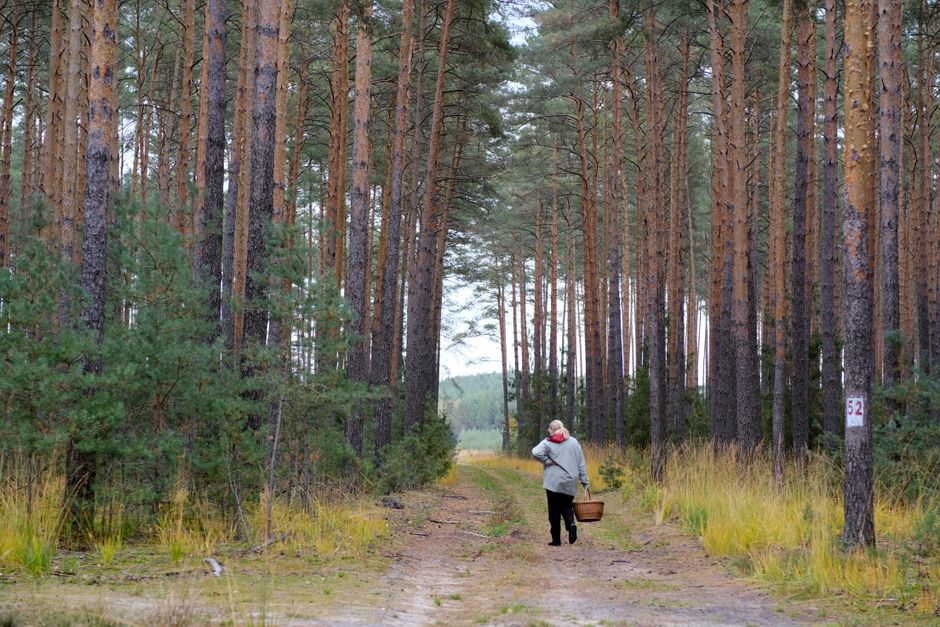
Nature — twenty minutes a week in a forest, park, or dune area demonstrably lowers stress hormones. Not the first ten minutes — those it takes your head to switch — but the second ten. Schedule it. Without an appointment it does not happen on its own.
8. When you are better off not handling this alone
Self-help works for most people with ordinary, periodic stress. It does not work for every case. Call your GP in any of these situations — waiting is not an advantage here.
You sleep less than four hours a night structurally or have not been falling asleep without help for weeks. Sleep loss of that scale is not a comfort issue; it is a health issue.
You have thoughts of suicide or you harm yourself. Call your GP directly or 113 (the Dutch national crisis line). Not tomorrow, today.
You use alcohol or drugs to get through the day. That is a sign that stress has passed normal-functioning territory.
Family or colleagues say you are not doing well. People around you sometimes notice the tipping point earlier than you do. Take their signal seriously.
A conversation with your GP takes fifteen minutes. The threshold is lower than you think. The GP hears this daily and can refer you to a psychologist, occupational physician, or specialised help.
Frequently asked questions
What are the most important tips for reducing stress?
Movement, regular sleep (seven to eight hours), one daily breathing exercise, boundaries at work, and limiting worry to a fixed slot of at most half an hour. According to Thuisarts you see a measurable difference after about four weeks of self-help.
How much sleep do I need to handle stress better?
Seven to eight hours per night for most adults, at roughly the same time. Irregular sleep is more burdensome on your stress system than shorter sleep at fixed times. Anyone sleeping less than four hours structurally should discuss this with a doctor.
Which food helps against stress?
No single food solves stress. What does help: avoid sugar peaks, limit caffeine after lunch, and eat varied so you get vitamin C and B vitamins through vegetables, fruit, whole grains, and pulses. A high-dose supplement is not the solution for most people.
What can I do specifically about work stress?
Practising boundaries is the core. Learn to recognise three types of requests where 'no' is the right answer and prepare sentences in advance. Close your workday consciously — not by sending the last email, but with a short routine that signals work is done for today.
When is stress chronic and should I see a doctor?
When you sleep less than four hours structurally, have thoughts of suicide, use alcohol or drugs to get through the day, or family or colleagues raise concerns. Call your GP. In acute crisis: call 113 or 0800-0113 (Netherlands). Waiting does not improve chronic stress — usually it worsens it.
How long does it take for self-help on stress to take effect?
Typically about four weeks according to Thuisarts, provided you keep up one to three tips daily. No noticeable effect after four weeks? Then the self-help track does not fit your situation, and a conversation with a GP or psychologist is the logical next step.