
Vitamin C is a water-soluble vitamin your body does not make itself. That means you need to get it from food daily — from vegetables, fruit, and for some people additionally from a drink or supplement. The European Food Safety Authority (EFSA) has approved six specific health claims for vitamin C. Those six are everything a manufacturer is officially allowed to put on a label. Everything else is research in progress, or marketing.
In this article we walk through all six recognised functions, with the numbers and sources. And at the end, three situations where additional vitamin C is actually a bad idea — because you rarely hear that from a seller.
What does vitamin C actually do in your body?
Vitamin C has six EFSA-recognised functions. A few of them are widely known (immunity, antioxidant), others rarely discussed (energy, fatigue, iron absorption).
The six functions, in the official wording from EFSA regulation 432/2012:
Vitamin C contributes to the normal function of the immune system. Vitamin C contributes to normal collagen formation for the normal function of blood vessels, bones, cartilage, gums, skin and teeth. Vitamin C increases iron absorption. Vitamin C contributes to the protection of cells from oxidative stress. Vitamin C contributes to normal energy-yielding metabolism. Vitamin C contributes to the reduction of tiredness and fatigue.
Below, what each function means in practice — and what it does not mean.

Vitamin C supports your immune system
The best-known function, and also the most poorly understood. Vitamin C helps white blood cells and barrier tissues such as your skin and mucous membranes function normally. It is not a shield that prevents colds.
What the research does show: in people who consistently take at least 200 mg of vitamin C per day, a cold lasts an average of 8% shorter in adults and 14% shorter in children (Cochrane review 2013, based on 29 studies). No dramatic effect, and only relevant with daily intake. Starting only when you are already ill demonstrably does nothing.
For athletes and people with heavy physical effort there is a second recognised claim: vitamin C contributes to the normal function of the immune system during and after intense physical exercise. Long endurance work temporarily depresses your immunity, and vitamin C plays a role in recovery.

Vitamin C and collagen for your skin
Collagen is the protein that gives structure to your skin, cartilage, bones, blood vessels, gums and teeth. Your body makes collagen itself — but to do so it needs vitamin C as a co-factor. Without enough vitamin C, collagen synthesis literally fails. That is why sailors in the 18th century developed scurvy: bleeding gums, poor wound healing, breaking bones — all collagen problems caused by prolonged vitamin C deficiency.
In modern Dutch nutrition, a real deficiency is rare. But for firm blood vessels, fast wound healing, and a healthy skin structure, vitamin C remains a daily necessity.
A persistent myth: extra vitamin C would prevent wrinkles. There is no evidence for this. What we do know: without enough vitamin C, collagen formation works less well. With enough vitamin C, it works normally — not above normal. More is not better.

Vitamin C helps absorb iron from plant-based food
Iron from plant sources (spinach, legumes, grains, seeds) is called 'non-heme iron' and is absorbed by your body significantly less well than iron from meat. Vitamin C changes that: it converts non-heme iron into a form your intestines absorb more easily.
Concretely: a glass of orange juice (around 80 mg vitamin C) with a spinach salad can triple iron absorption. For vegetarians, vegans, and women with a low iron status, this is not a detail.
Practical combinations that work: orange or kiwi with seeded breakfast cereal, bell pepper in a lentil soup, lemon juice over a bean salad, strawberries with oat muesli.
Conversely, something to factor in: coffee and tea inhibit iron absorption from the same meal, due to the tannins they contain. For anyone watching iron: drink coffee an hour before or after, not with the meal itself.

Vitamin C as an antioxidant
Vitamin C is water-soluble and works mainly in the blood and the watery parts of your cells. It neutralises free radicals — unstable molecules that arise from normal metabolism, sunlight, cigarette smoke, pollution and intense exercise. Too many free radicals cause oxidative stress, which in the long term contributes to ageing and a higher risk of chronic conditions.
Important: vitamin C does not work alone. It regenerates vitamin E (which is active in fatty tissue), and itself depends on other antioxidants such as selenium and glutathione. No single antioxidant in isolation does much. A varied diet with many colours — bell pepper, berries, dark leafy greens, pomegranate, purple onions — delivers the broad spectrum that works in series.
This is why we are sceptical of high-dose vitamin C marketed as 'detox'. Above 200 mg per day, you excrete most of it through urine. Studies in which a single antioxidant was given in high dose sometimes showed adverse effects. A broad diet beats isolated pills.
Energy and fatigue: what vitamin C does and does not do
Two separate EFSA claims: vitamin C contributes to a normal energy-yielding metabolism and to the reduction of tiredness and fatigue. On the label, people often read this as: 'vitamin C gives energy'. That is a coarse simplification.
What it really means: vitamin C is a co-factor in the synthesis of L-carnitine, the molecule that transports fatty acids to the mitochondria where they are converted into energy. Without enough vitamin C, that process works less well and you may feel tired.
But if you already get enough vitamin C, extra does not give more energy. It is not caffeine, not a B12 injection, not a pre-workout. People who feel chronically tired despite good nutrition almost never have a vitamin C deficiency. Iron, vitamin D, B12, thyroid or sleep are more likely causes. Have those checked first by your GP rather than blindly buying a high-dose supplement.
How much vitamin C do you need per day?
The Dutch Health Council sets 75 mg per day for adults from 18. Pregnant women 85 mg, breastfeeding women 135 mg. For smokers, 35 mg extra on top of the standard recommendation applies, because smoking depletes vitamin C faster.
One red bell pepper or one kiwi covers the whole day. With two pieces of fruit and 200 grams of vegetables, you reach 80 to 130 mg on average — well above the norm. Real deficiencies in the Netherlands are rare.
We have written a separate, detailed article on the top 10 vitamin C sources per 100 grams. The short version: bell pepper, cabbage, kiwi, berries, citrus. Not just orange — it does not even make the top 5.
When you are better off not taking extra vitamin C
Three situations in which a vitamin C supplement does not help or is even harmful.
With kidney stones or a predisposition to them. High doses of vitamin C increase oxalate excretion in urine, which can raise the risk of kidney stone formation. Always discuss this with your GP before taking a high-dose supplement.
With haemochromatosis (iron-overload disease). Because vitamin C increases iron absorption, extra vitamin C is counterproductive in this condition.
As 'prevention' for colds. The evidence is missing. Vitamin C can make a cold slightly shorter for those who consistently take at least 200 mg per day, but does not prevent it. For someone without a deficiency, additional vitamin C as cold prevention adds little.
And a broader piece of advice: if you have a varied diet with vegetables and fruit, you do not need a vitamin C supplement. Then your money is better spent on better food than on better pills.
Frequently asked questions
What is vitamin C good for?
Vitamin C has six EFSA-recognised functions: it supports the immune system, helps form collagen for skin and blood vessels, increases the absorption of iron from plant-based food, acts as an antioxidant, contributes to a normal energy metabolism, and helps reduce fatigue.
What does vitamin C do for your skin?
Vitamin C is a co-factor in the formation of collagen, the protein that gives your skin firmness. Without enough vitamin C, collagen synthesis works less well. With enough vitamin C it works normally — not above normal. Extra vitamin C does not prevent wrinkles.
How much vitamin C do you need per day?
75 mg per day for adults from 18. Pregnant women 85 mg, breastfeeding 135 mg, smokers 35 mg extra. One red bell pepper or one kiwi covers the whole day. With two pieces of fruit and 200 grams of vegetables you go well beyond that.
Does vitamin C help against colds?
Not for prevention. With consistent daily intake of at least 200 mg, a cold can last on average 8% shorter in adults and 14% shorter in children (Cochrane review 2013). Starting only when you are already ill demonstrably does nothing.
Can you get too much vitamin C?
From food, hardly — surplus leaves the body through urine. From supplements yes: above 1000 mg per day can cause stomach issues, diarrhoea, and in sensitive people kidney stones. The European safety upper limit is 2000 mg per day for adults.
Does vitamin C work as an antioxidant?
Yes, but in conjunction with other antioxidants. Vitamin C neutralises free radicals and regenerates vitamin E. No single antioxidant works effectively in isolation. A varied diet with bell pepper, berries, dark leafy greens and pomegranate delivers the broad spectrum that works in series.
A Forever product that aligns with this topic
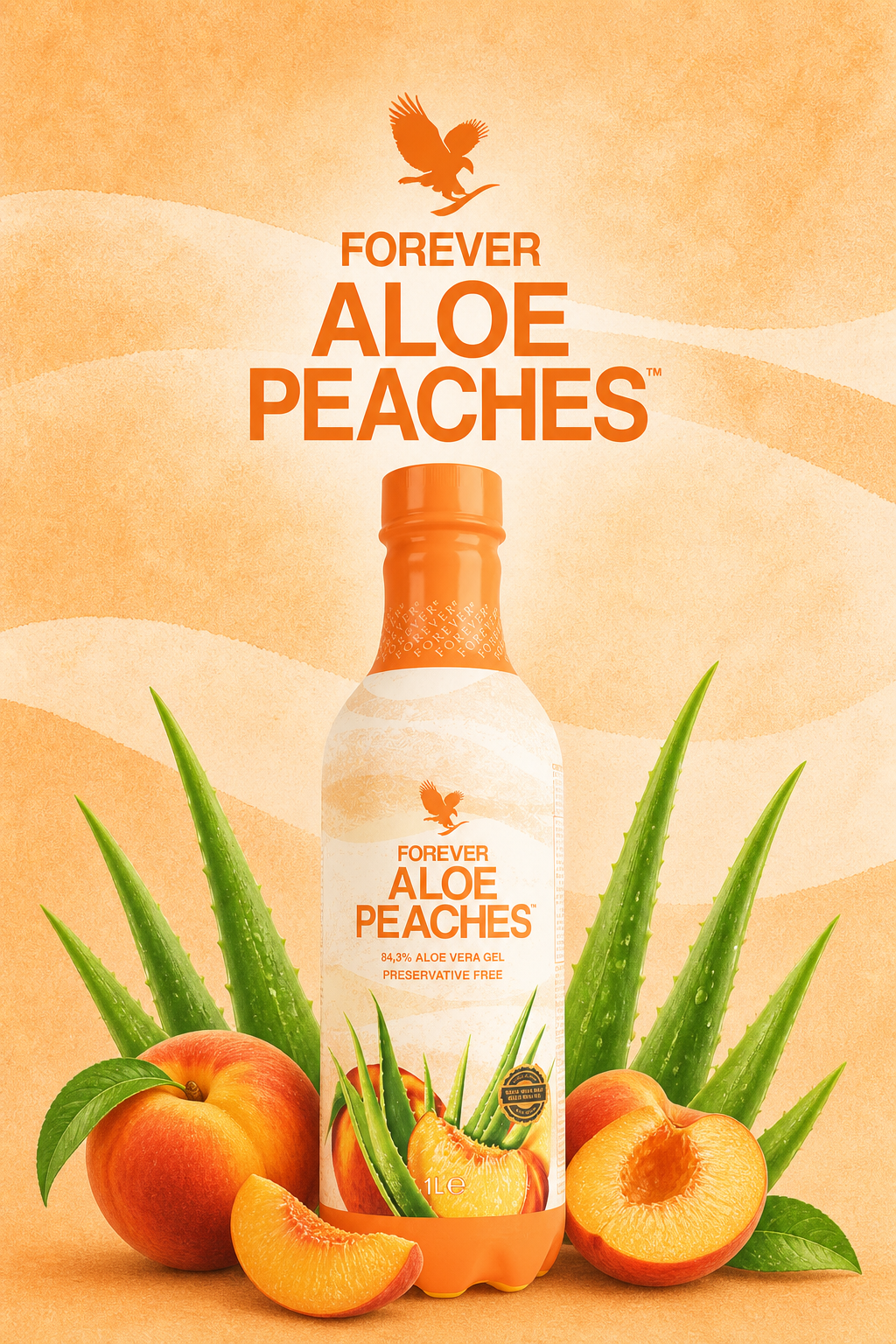
Forever Aloe Peaches
84.3% pure aloe vera gel with vitamin C
Vitamin C contributes to normal collagen formation for the normal function of skin.
For anyone wanting to make vitamin C part of a daily routine, an aloe vera drink with vitamin C is a simple addition to your vegetables and fruit. Aloe Peaches combines both and matches the collagen claim at the heart of this article.
A food supplement is not a substitute for a varied, balanced diet and a healthy lifestyle.