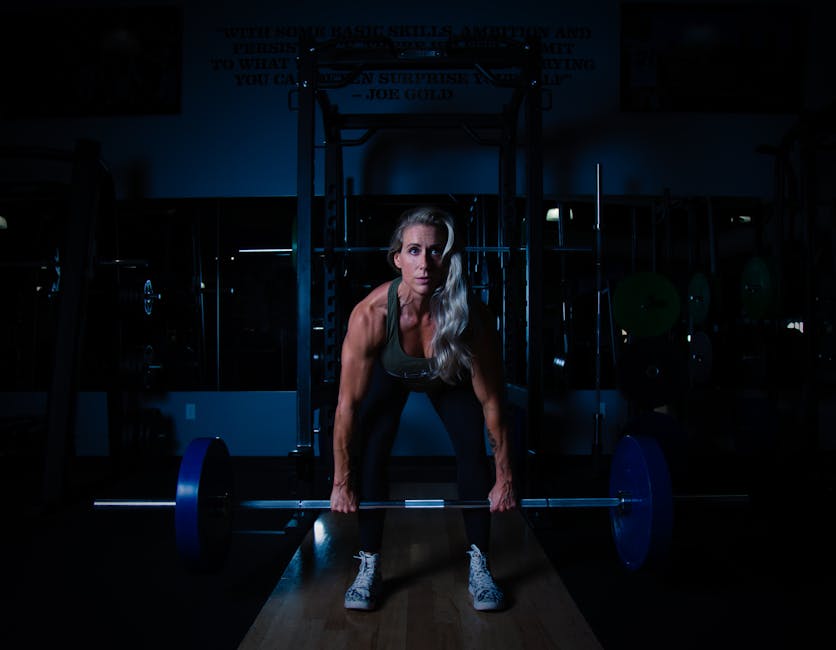
Preserving muscle mass while losing weight requires three things: a modest caloric deficit of 300 to 500 kcal per day, sufficient protein (1.2 to 1.6 grams per kilo) and two to three strength training sessions per week. Those who only cut calories and run cardio lose on average a quarter to 40 percent of weight as muscle. Those who take the three pillars seriously lose almost exclusively fat.
That difference is greater than it appears. Someone who loses ten kilos and gives up three kilos of muscle has a lower resting metabolism than before the attempt — which makes weight regain more likely. Someone who loses ten kilos and loses only fat has the same metabolism and a stronger body. Below, you read how to take that second path.
Why muscle preservation matters more than kilo numbers on the scale
For a woman over 30, muscle loss begins to occur naturally and slowly. Around menopause it accelerates due to declining oestrogen. Add it up: a woman who loses about one percent muscle mass per year from her 30s, then layers a crash diet on top in which another three kilos of muscle disappears, arrives at her mid-50s with a body that structurally burns less energy — and that struggles to maintain weight.
Muscle is not a cosmetic detail. It is your largest organic engine: 22 percent of your resting metabolism comes from muscle tissue. Beyond that lies your insulin sensitivity (relevant with advancing age and weight loss), your posture, your strength capacity and your fall prevention later in life.
The number that counts is therefore not your weight, but your ratio of muscle to fat. A woman whose clothing fits two sizes smaller while she has lost no kilos has replaced fat with muscle — usually exactly what she wanted. A woman who lost five kilos but whose clothing still fits the same has mainly lost water and muscle — and is on a temporary win.
The caloric deficit: no more than 20 percent below maintenance
The biggest mistake we see is too large a caloric deficit. Women who go on a crash of 1000 kcal per day achieve fast results in the first few weeks — after which it capsizes.
What works: 300 to 500 kcal below maintenance per day. For most women between 1500 and 1900 kcal. That produces half a kilo of weight loss per week, enough protein budget to reach 1.4 g/kg, and enough energy to seriously strength train two to three times a week.
A deficit below 20 percent of your maintenance is a threshold value. Below that, your body switches to a higher muscle-breakdown mode to supply amino acids for energy. Research on weight loss interventions shows that with large deficits, 30 to 40 percent of weight lost consists of fat-free mass — with modest deficits combined with strength training, only 5 to 15 percent.
The pro-muscle-preservation calculation is therefore simple: better twelve months 300 kcal below than four months 800 kcal below. The endpoint in kilos is equal, but your body composition is incomparably better in the first case.

Strength training: two to three times per week, non-negotiable
Eating protein without strength training is the difference between having amino acids in your blood and amino acids that are actually built into muscle. Your body needs a stimulus — a load heavier than it is used to — to do something with those amino acids.
Two to three times per week, thirty to sixty minutes, with progressive overload. That is the standard. The Dutch Standard for Healthy Movement names strength training twice a week explicitly as a standalone pillar, not as a bonus alongside cardio.
A simple starting layout. Day 1: squats (3 sets × 8-12), Romanian deadlifts (3 × 10), push-ups or bench press (3 × 8-12), rows (3 × 10). Day 2 (48 hours later): lunges (3 × 10 per side), overhead press (3 × 8-12), pull-ups assisted or lat pulldown (3 × 8-12), planks (3 × 30-60 seconds). Six exercises per session, three sets, done.
The key word is progressive overload: each week you try to lift slightly more, or one repetition extra, or one set extra. Not the same weight for eight weeks — that is stagnation. Write down what you did and come back next week 2.5 kg or one rep higher.
Cardio: friend in moderation, enemy in excess
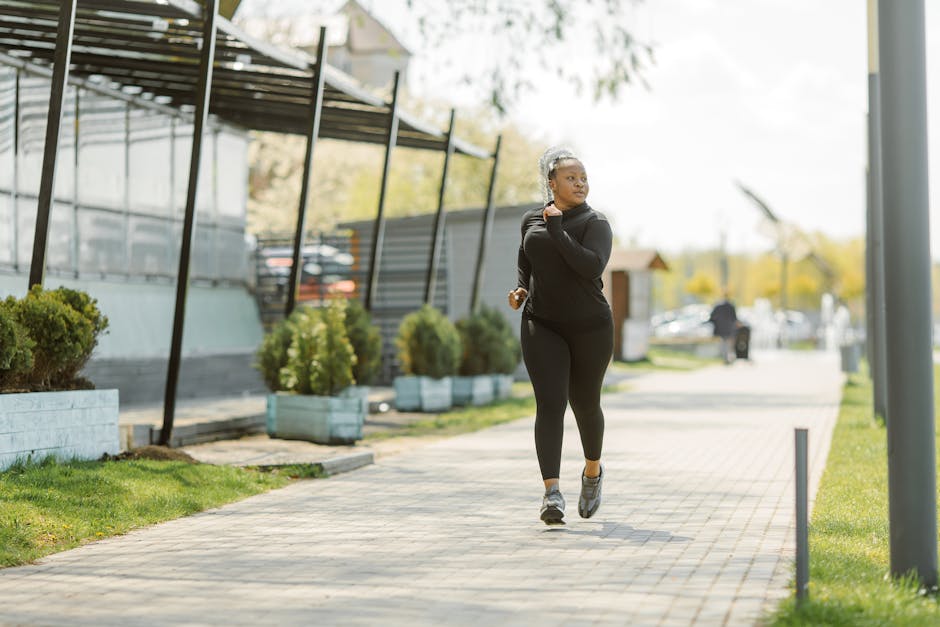
Cardio gets too large a place in the schedule among women who want to lose weight. Three to five hours of running or spinning per week on a too-low calorie budget is not a recipe for fat loss — it is a recipe for exhaustion and muscle breakdown.
What the literature shows: moderate-intensity cardio of 150 minutes per week (as the Dutch movement standard prescribes) suffices alongside strength training for cardiovascular health and additional fat loss. Above that comes the law of diminishing returns: more hours yield little extra fat loss and cost recovery capacity needed for strength training.
Walking is the underestimated hero here. Ten to twelve thousand steps per day — simply through your regular life — is consistently linked in research to fat loss without disturbing your strength training recovery. No sports clothing, no gym, no calorie counting. Just within your movement budget.

Sleep and stress as accelerators — or destroyers — of muscle preservation
Research often cited: in weight loss interventions where participants slept six hours instead of eight, the percentage of muscle loss was nearly 60 percent higher — at the same calorie budget, same nutrition and same training. Sleep is not a nice extra. It is a pillar.
The mechanism is hormonal. Insufficient sleep raises cortisol (catabolic hormone, contributes to muscle breakdown and abdominal fat storage) and lowers testosterone and growth hormone (anabolic hormones). In women the effect weighs as heavily as in men — sometimes more around menopause.
In practice: seven to nine hours in bed, set times, screens off thirty minutes before sleep, room cool and dark. When lying awake do not stay longer than twenty minutes — get up, read a few pages, return. Stress management belongs here — a daily short walk, breathing exercises or a conversation with someone often works more effectively than a new app.
During menopause and on a weight-loss injection, muscle preservation becomes critical
Two groups have extra reason to take this seriously.
Women around menopause. Declining oestrogen accelerates natural muscle breakdown and shifts fat distribution towards the abdomen. Those who rely only on calories, without strength training and without extra protein, go through a double hit — biological breakdown plus diet breakdown. Three strength sessions a week is then not a luxury, it is insurance. Combine with 1.5 g protein per kilo and the balance shifts.
Women on a weight-loss injection (Ozempic, Wegovy, Mounjaro). GLP-1 medication strongly reduces appetite. The known risk in the medical literature: up to 40 percent of weight lost is muscle when nothing is done with nutrition and movement. For that specific path we have separate coaching after the injection. The four pillars — protein, fibre, strength training, rhythm — are not an option there, they are a requirement.
In both situations the same principles apply as in this whole article, only with more urgency. For a detailed approach with numbers and example days, read our food-first pillar.
When this is not for you
Muscle preservation during weight loss is not the right goal for everyone at every moment. Four situations in which you better follow another path.
If you have an eating disorder or are in recovery. Counting calories, weights on the scale, grams of protein per day — for those vulnerable to eating disorders this is exactly the wrong focus. A mental health professional or specialised dietician comes first here.
If you have just given birth or are pregnant. Weight loss and intensive strength training only belong again after the six-week check-up and in consultation with your midwife or GP. The body recovers and needs a different programme.
If an injury pauses your strength training. Three weeks without strength you can still catch up. Three months without — then it is wiser to shift the caloric deficit to maintenance until you can train again.
If you never want structure. The approach requires four months of moving with numbers, planning days and tracking weights. Those who recoil at that may better follow the main pillar of food-first without focusing on muscle preservation. It is better than nothing, and it is not this article.
For the rest: for most women who want to structurally eat better and preserve their body, the combination of modest deficit, sufficient protein and serious strength training is likely where you currently get the most results. Calculate it, plan two days a week, and see where you stand three months from now.
Frequently asked questions
How many kilos per week is safe to lose without muscle loss?
About half a kilo per week. That corresponds to a calorie deficit of 300 to 500 kcal per day. Faster than that and you increasingly lose fat-free mass — at 1 kilo per week or more, up to 30-40 percent of weight lost can be muscle.
How much protein do I need to preserve muscle while losing weight?
1.2 to 1.6 grams per kilo body weight per day, distributed across four moments of 20 to 30 grams. Around menopause and with strength training you can move toward 1.5-1.8 g/kg. Read our article on how much protein per day for women who want to lose weight.
Will strength training give me masculine muscles?
No. Women on average have 15-20 times less testosterone than men — the hormone that drives large muscle growth. What strength training does in women is preserve existing muscle during weight loss, and with years of consistent training build an extra 2-4 kg of muscle mass. No risk of a male physique.
How often per week should I strength train for muscle preservation?
Twice a week is the minimum, three times is better, four or five adds little for non-athletes beyond recovery load. Distribute push (upper body pushing), pull (upper body pulling) and legs across your sessions. Each training session 30 to 60 minutes.
May I still do cardio during this approach?
Yes, in moderation. 150 minutes of moderate-intensity per week (walking, cycling, swimming) suffices alongside strength training. Above that, recovery comes under pressure and the effect cuts into your strength gains. Walking counts and is the most underestimated form of cardio.
How long until I see results?
Energy and satiety after three weeks. Visible change in body composition after three months. A clearly different body at the same weight after six to nine months. No 'in four weeks' promise — that is exactly what we do not do.