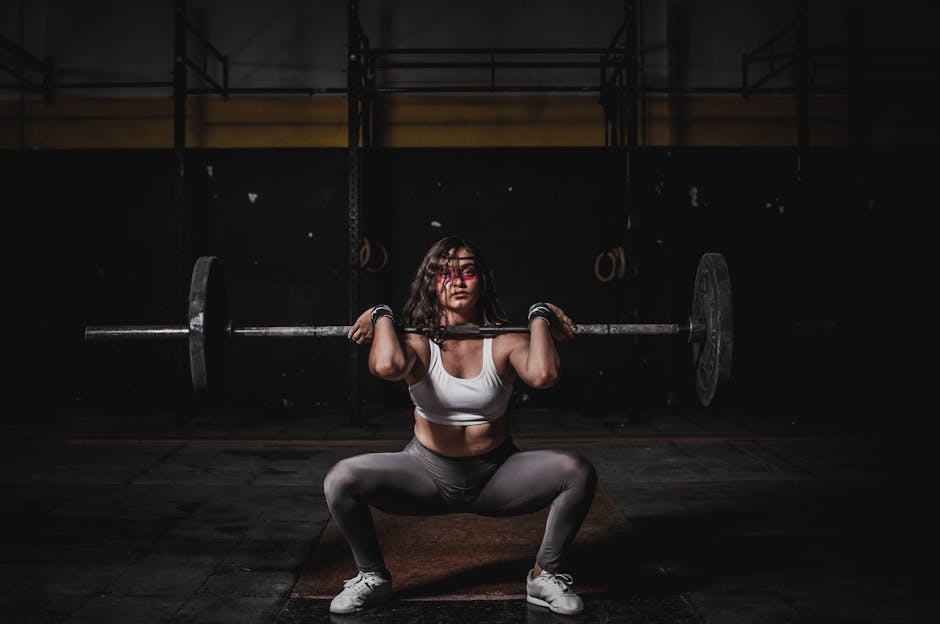
Strength training and protein for women work as one combination, not as two separate matters. For weight loss or muscle preservation: two to three strength sessions per week plus 1.2 to 1.6 grams of protein per kilo body weight per day. For active muscle building (small caloric surplus): three strength sessions plus 1.6 to 2.2 grams of protein per kilo, distributed across four eating moments of 25 to 40 grams each.
The biology behind the why: a strength stimulus without sufficient protein builds barely any muscle; sufficient protein without strength builds no muscle at all. One without the other gives you at most half the result. Below are the numbers per situation, the execution per week, and when a gym with attached nutrition coaching makes more sense for you than struggling alone.
How much protein per situation: three scenarios
Women usually fall into one of three scenarios. The scenario determines the number — no one-size-fits-all.
Muscle preservation during weight loss. 1.2 to 1.6 g protein per kilo body weight per day. For a 70-kilo woman: 84 to 112 grams per day. Goal: not losing what you have while losing fat. Strength training twice a week is the minimum here.
Maintenance plus general fitness. 1.0 to 1.3 g protein per kilo per day with two strength sessions a week. For 70 kilos: 70 to 90 grams. For those who are at weight and want to preserve muscle for age-related reasons.
Active muscle building. 1.6 to 2.2 g protein per kilo per day, with a light caloric surplus of 100 to 200 kcal and three strength sessions per week. For 70 kilos: 112 to 154 grams of protein per day. Goal: building new muscle — not only preserving.
Around menopause all three numbers can step up half a notch. Declining oestrogen accelerates muscle breakdown so the baseline need lies higher.
Distributing across the day: four moments of 25 to 40 grams
Your body utilises at most 25 to 40 grams of protein per meal effectively for muscle growth and preservation — depending on age and activity. Above 40 grams per moment the extra protein does not reach the muscle. Below 20 grams per moment you deliver insufficient leucine impulse to seriously activate protein synthesis.
In practice: four eating moments with 25 to 30 grams of protein each works best for most women. A fifth moment in the evening as a snack can help on training days — quark with berries provides another 20 to 25 grams before sleep without pressing on satiety.
Timing around training: a protein-rich meal in the two hours before and the two hours after your strength session works demonstrably better than a protein-less pre-workout. No miracle formula — but a norm confirmed in dozens of studies. Those who train in the morning without breakfast lose measurable training effect compared to those who first had yogurt with grains.
Which exercises — and how often
Compound exercises deliver the most return per minute. Squats, deadlifts (Romanian or conventional), bench press or push-ups, rows, overhead press, pull-ups (assisted if needed). Five to six exercises per session, three sets each, with a weight that allows no more than eight to twelve repetitions.
Frequency. For muscle preservation during weight loss: two sessions per week, 45 to 60 minutes each. For maintaining existing muscle: also two sessions. For active building: three sessions, with 48 to 72 hours of rest between training the same muscle group. Four or five sessions yield little extra result for non-athletes — recovery becomes the limiting factor, not the stimulus.
Progression. Each week try to lift slightly more, or one repetition extra, or one set extra. Write down what you did. No progression means no growth — that is biological, not motivational. A logbook (phone app, notebook, photo of the gym screen) is not extra work; it makes the first months easier because you do not need to remember what you did last week.
Which women should be careful with rapid progression. During or just after an injury, with an osteoporosis diagnosis, with cardiac conditions. Then starting under a physiotherapist or personal trainer is wiser than picking up the scheme yourself.
Do women get broad from strength training? No — and that is not an opinion
The recurring question in practice: will strength training not make me 'broad' or 'masculine'? The short answer: no, and that is not an opinion — it is biology.
Women produce on average 15 to 20 times less testosterone than men. Testosterone is the hormone that drives large muscle growth. Without a high dose (such as an extreme professional bodybuilder who may or may not supplement), a woman builds two to four kilos of extra muscle mass over years of consistent training — not the dramatic change media often suggests.
What strength training does in women: preserves existing muscle during weight loss, gives shape to the places that usually take loose form (back, shoulders, back of legs), and preserves or slightly raises resting metabolism. Result is usually that the same clothing size fits tighter rather than wider — fat away, muscle underneath.
When a gym with nutrition support works for you
Reading about numbers is one thing. Executing weekly with consistency is another — that is where many women get stuck. Three reasons why a gym with attached nutrition coaching usually works where self-managed plans falter.
Two people see the same body. Your trainer sees what you do in the gym (technique, weights, progression). A nutrition coach sees what you eat at home and how your habits build up. Both together catch what one of the two would otherwise miss.
Preventing stop-with-goal-without-plan. The biggest dropout in strength-training programmes is not in the first week — it is around week six to twelve, when initial motivation is gone and the physical stimulus has become routine. A weekly or monthly check-in makes it predictable that you are still present in week ten.
One coherent story. A trainer who says 'eat more protein' and a dietician who says 'less fat' creates confusion. When both work from the same nutritional philosophy, it gives calm and consistency.
We work together with personal trainers and gyms who want to complement their training with the nutrition and habit side. For gym owners and trainers, the full offer is on the gym partnership page. For members: ask your trainer if they work with us, or request a conversation directly with us.
When this is not for you
Three situations in which the approach in this article is not the right route.
With kidney disease. A protein intake toward 2 g per kilo can be harmful with reduced kidney function. Consult your GP or internist before structurally increasing your intake.
With active eating disorder symptoms. Counting numbers, planning meals, tracking weight and circumference — for those vulnerable to eating disorders this is exactly the wrong focus. A mental health professional or specialised dietician comes first.
With ongoing physiotherapy treatment. When you are following a specific exercise programme for an injury or post-operative recovery, that takes precedence over generic strength training advice. Our approach does not supplement that path before the physio has given the green light.
For the rest: for most women who want to structurally change something in their body, the combination of sufficient protein and consistent strength training is likely closer to where you currently get the most result than any cardio-only approach. Calculate the numbers, plan two days a week, and see what has changed three months from now.
Frequently asked questions
How much protein per day for a woman who wants to build muscle?
1.6 to 2.2 grams per kilo body weight per day, plus a small caloric surplus of 100 to 200 kcal and three strength sessions per week. For a 70-kilo woman: 112 to 154 grams of protein, distributed across four moments of 25 to 40 grams.
How often per week is enough strength training for muscle growth?
Twice a week for preservation, three times for building. Four or five times yields little extra result for non-athletes — recovery becomes the constraint. Keep 48 to 72 hours of rest between training the same muscle group.
Does strength training make women broad or masculine?
No. Women produce 15 to 20 times less testosterone than men, the hormone that drives large muscle growth. Without high doses, women build 2 to 4 kg of extra muscle mass over years of consistent training — which usually means clothing fits tighter, not wider.
What is the best time to eat protein around training?
A protein-rich meal in the two hours before and the two hours after training. Eating directly before or after training is not required — the protein synthesis 'window' is much wider than earlier broscience suggested. Four moments distributed across the day is more important than exact timing.
Are animal proteins better than plant-based for muscle growth?
Animal proteins are 'complete' — they contain all nine essential amino acids in good proportions. Plant-based proteins often miss a few, except soy, quinoa and hempseed. With a mixed plant-based pattern you can meet your need easily; a single plant-based source alone usually does not suffice.
Do I need a protein shake to reach my target?
Usually not. A mixed eating pattern with attention to breakfast and lunch delivers 100 to 130 grams of protein per day. A shake can help on training days or with low appetite, but is not a replacement for real food.