Nutrition during the weight-loss injection comes down to one thing: getting enough in despite less appetite. GLP-1 medication such as Ozempic, Wegovy and Mounjaro curbs your hunger and makes you feel full sooner. As a result you eat less automatically, and that is exactly how the injection works. But eating less also means less protein, less fibre and fewer vitamins and minerals — while your body needs those most to stay strong.
That is why every bite counts more heavily than before. In this article you will read how to keep your protein, fibre and nutrients up with smaller portions, with a sample day included. And at the end: when nutrition alone is not enough and you are better off going to your doctor or dietician. Because this path runs alongside your medical treatment, never instead of it.
Why nutrition matters more during the weight-loss injection
With rapid weight loss you never lose only fat. Part of what comes off is muscle mass, and the less you eat, the larger that part becomes. Muscle mass burns energy, keeps you strong and helps you maintain your weight after the injection. Lose too much muscle and your metabolism drops, making weight regain more likely.
The second risk is a nutrient shortfall. Anyone who consistently eats below their own needs often takes in too little protein, fibre, iron, vitamin B12 and magnesium. You notice it in your energy, your bowel movements and your concentration — complaints easily dismissed as a side effect of the injection, while it can just as well be undernutrition.
The solution is not to eat more, but to eat more deliberately. With a smaller portion you consciously choose what your body needs most: protein first, then fibre, then the rest.
Protein first: how to keep your muscle mass
Protein is the most important nutrient during the weight-loss injection. Proteins contribute to the maintenance of muscle mass, and that is exactly what you want to protect while losing weight. During weight loss, the Netherlands Nutrition Centre advises 1.2 to 1.6 grams of protein per kilo of body weight per day; if you also do strength training, that may go towards 1.6 to 2.0 grams. For someone of 70 kilos that is around 84 to 140 grams per day.
With little appetite you only reach that if you spread the protein across the day. Per eating moment your body uses about 20 to 30 grams of protein for muscle maintenance; more at once adds little. So aim for 20 to 30 grams at each eating moment rather than one big piece of meat in the evening.
Start at breakfast, because that is usually where it goes wrong. A slice of bread with jam provides almost no protein; quark, Skyr, eggs or a protein-rich yoghurt do. Good sources that also go down with little appetite: dairy (quark and Skyr contain more protein than regular yoghurt), eggs, chicken, fish, tofu and legumes.
Fibre and fluids: against constipation and for satiety
Constipation is a common complaint on the injection, simply because less food and fibre pass through your gut. Fibre helps keep your bowels moving and also gives a feeling of fullness that lasts longer. The advice is 30 to 40 grams of fibre per day, and you do not reach that automatically with small portions.
So deliberately choose fibre-rich carbohydrates instead of white ones: wholemeal bread, oats, legumes, vegetables and fruit with the skin. A handful of nuts (keep it to around 15 grams if you are watching calories) and flaxseed or chia seed through your yoghurt push your fibre up easily.
Drink enough water. Fibre only works well with sufficient fluids, and when you eat less you also take in less fluid through food. On top of that, thirst is sometimes experienced as hunger or nausea. A glass of water at each eating moment is a simple habit that solves a lot. If your bowel movements do not work despite fibre and water, discuss it with your doctor.
Enough energy and nutrients with small portions
Besides protein and fibre, your body needs vitamins and minerals that fall short first when you eat little. Vitamin B12, iron and magnesium contribute to the reduction of tiredness and fatigue and to a normal energy-yielding metabolism. If you feel listless on the injection, a shortfall is just as much a suspect as the medication itself.
So eat colourfully within your smaller portions: vegetables in different colours, an egg or fish for B12, green leafy vegetables and wholegrain for iron, nuts and seeds for magnesium. The less you eat, the more important it is that what you do eat is full of nutrients rather than empty calories.
Do not skip meals, even when you have no appetite. 'Not eating because the injection means I do not have to' sounds logical, but it is exactly how you end up in a shortfall. Three small, nourishing eating moments plus a snack work better than one meal a day.

A sample day during the weight-loss injection
Here is what a day looks like that covers your protein, fibre and nutrients, even with little appetite. The portions are small on purpose — it is about the composition, not the quantity.
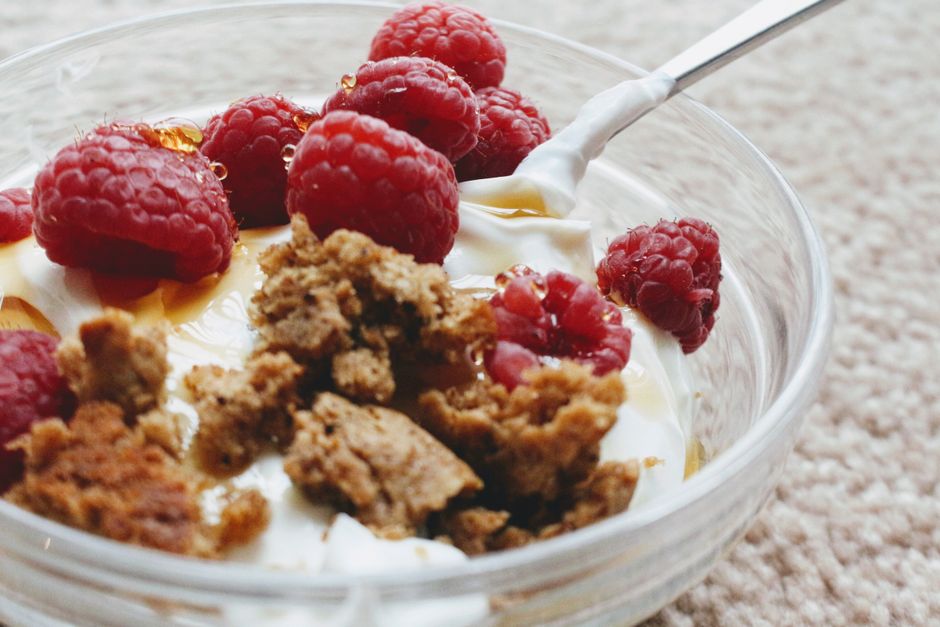
Breakfast: a bowl of quark or Skyr (around 20 grams of protein) with a handful of berries, oats and some flaxseed. Snack: a boiled egg or a handful of nuts. Lunch: a wholemeal sandwich with chicken or a bowl of lentil soup — protein plus fibre in a small volume. Dinner: a portion of fish, tofu or chicken with two kinds of vegetables and a small portion of wholegrain or sweet potato.
If eating really does not work on a given day because of nausea, do not force it. Choose something small and protein-rich that does go down, such as a few bites of quark or a glass of milk, and pick up the thread again the next day. If the nausea persists, put it to your doctor.
What you are better off leaving
A few things make your day on the injection unnecessarily hard. Large, fatty meals stay in your stomach for a long time and bring on nausea sooner — smaller portions are more comfortable. Deep-fried food, cream and very fatty dishes also often sit heavier than before.
Empty calories are a missed opportunity. If you eat little anyway, soft drinks, sweets or a handful of biscuits add nothing but calories without protein or fibre. You spend that same room better on something nourishing. Alcohol falls in the same category: many calories, no nutritional value, and it can hit harder on an empty stomach.
And the biggest pitfall, once more: not eating at all. The injection takes away your hunger, not your need for nutrients. Eating too little is not an acceleration of your result, it is how you lose muscle mass and energy.
When nutrition is not enough
Nutrition is the layer you hold in your own hands, but it has limits. If you stay tired despite good nutrition, lose weight faster than about half a kilo to a kilo per week, or have persistent complaints such as nausea, dizziness or hair loss, put that to your prescribing doctor. Those are signals that belong in the medical corner, not in a blog.
With overweight accompanied by other conditions, your GP can refer you to a dietician or a Combined Lifestyle Intervention, often reimbursed through Dutch basic insurance. A dietician has access to your blood values and your medical context and therefore outranks generic nutrition advice.
Finally, the most important caveat: this article is nutrition and lifestyle information, not medical advice. Your doctor prescribes the medication and monitors your treatment; nutrition and exercise complement that and never replace it. If you use medication or are in doubt, consult your doctor first before adjusting your nutrition or exercise. A food supplement is, moreover, not a substitute for a varied, balanced diet and a healthy lifestyle.
Frequently asked questions
What is best to eat during the weight-loss injection?
Protein first, then fibre and nutrients. Spread 20 to 30 grams of protein across each eating moment from dairy, egg, chicken, fish, tofu or legumes, choose fibre-rich wholegrain and vegetables, and drink enough water. With less appetite, the composition of each bite counts more than the quantity.
How much protein do you need during the weight-loss injection?
During weight loss, 1.2 to 1.6 grams of protein per kilo of body weight per day, and towards 1.6 to 2.0 grams if you also do strength training. For someone of 70 kilos that is around 84 to 140 grams per day, spread across the eating moments.
Why do you lose muscle mass on the weight-loss injection?
With rapid weight loss, part of it is always muscle mass, and the less you eat, the larger that part. Enough protein and strength training limit that loss. Eating too little does not speed up your result, it costs you muscle and energy.
What helps against constipation during the weight-loss injection?
Fibre and fluids. Aim for 30 to 40 grams of fibre per day from wholegrain, legumes, vegetables, fruit with the skin and some nuts or flaxseed, and drink enough water. If constipation persists despite fibre and water, discuss it with your doctor.
Can you skip meals if you have no appetite?
Better not. The injection takes away your hunger, not your need for protein, fibre and nutrients. Skipping meals is a fast route to a shortfall and to muscle loss. Choose small, nourishing eating moments rather than nothing at all.
Does this replace the advice of my doctor or dietician?
No. This is nutrition and lifestyle information, not medical advice. Your doctor prescribes the medication and monitors your treatment. With persistent complaints or overweight accompanied by other conditions, a dietician or your GP belongs in the picture, often reimbursed through Dutch basic insurance.